


Excessive hair loss, a widening hair parting, or a feeling of thinning hair are problems that many people start to worry about when they notice that their hair isn't as thick as before. These problems can be caused by several factors, including genetics, hormones, stress, and daily hair care habits.
Treating hair loss and thinning requires attention to the hair, scalp, and hair roots simultaneously. Hair Booster is a product designed specifically to address hair loss and thinning, while also nourishing the scalp and hair roots from within. Today, Romrawin Clinic will introduce you to what Hair Booster is, what it does, who it's suitable for, and the treatment process. Read more in this article.
Hair Booster is a program designed to address hair loss, thinning hair, or a perceived decrease in hair volume. It focuses on caring for the hair from the scalp to the roots through four steps: reducing hair loss, nourishing hair roots, revitalizing the scalp and controlling oil production, and using technology to stimulate hair follicle activity.
Hair Booster treatment doesn't just care for the hair itself, but also covers the scalp and hair roots to help make hair overall stronger and denser. It's suitable for those who are starting to notice increased hair loss, a wide parting showing the scalp, or thinning hair. Before treatment, the doctor will assess the condition of the hair and scalp to plan a treatment suitable for each individual's problems.
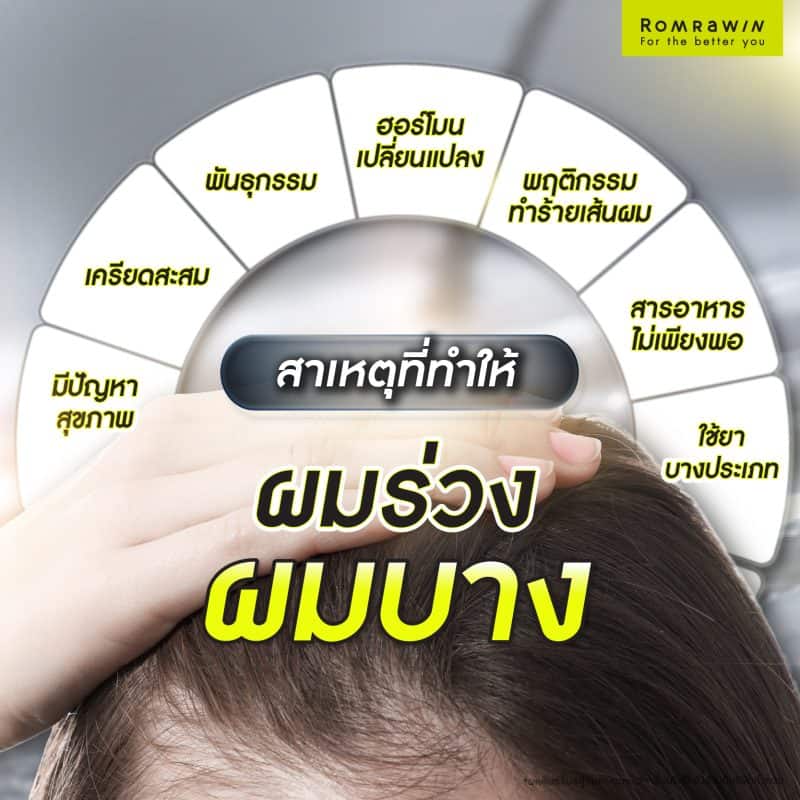
Causes of hair loss and thinning hair.
Hair loss and thinning can be caused by many factors, both internal and external to daily habits. The most common causes are as follows:
Hair thinning can be hereditary. If there's a history of hair thinning or baldness in your family, you may experience the same problem. The timing of when changes begin to appear varies; some people may start experiencing hair thinning at a young age, while others may notice it gradually as they get older.
Hormones are another factor that affects hair health. During bodily changes, such as after childbirth or menopause, as well as in individuals with certain hormonal imbalances, you may notice increased hair loss or thinning of your hair.
Prolonged stress can affect hair health and cause increased hair loss. Some people may notice a decrease in hair volume, especially during periods of insufficient sleep, overwork, or ongoing daily stress.
Nutrients such as protein, iron, zinc, and certain vitamins are crucial for hair health. Insufficient intake of these nutrients, for example due to strict diets or an unvaried diet, can lead to increased hair loss.
Certain health problems can affect hair, such as thyroid disorders, scalp issues, or autoimmune diseases, all of which can cause hair loss or thinning. If hair loss becomes noticeably more severe or persists, you should consult a doctor to determine the cause and receive appropriate treatment advice.
Certain medications can cause hair loss as a side effect. The symptoms and severity vary from person to person. If you notice increased hair loss after starting medication, consult your doctor to determine the cause. Do not stop the medication, reduce the dosage, or change medications on your own.
Certain daily habits can increase hair breakage and hair loss, such as frequently tying hair too tightly, using heat styling tools often, and bleaching, dyeing, perming, or straightening hair. These processes can dry out the hair, making it brittle and prone to breakage, and over time, may lead to overall thinning of the hair.
Hair loss and thinning may not show immediate results, but will gradually become noticeable as a decrease in hair volume, a change in the hair parting, or a more visible scalp. You can check for these early signs as follows:
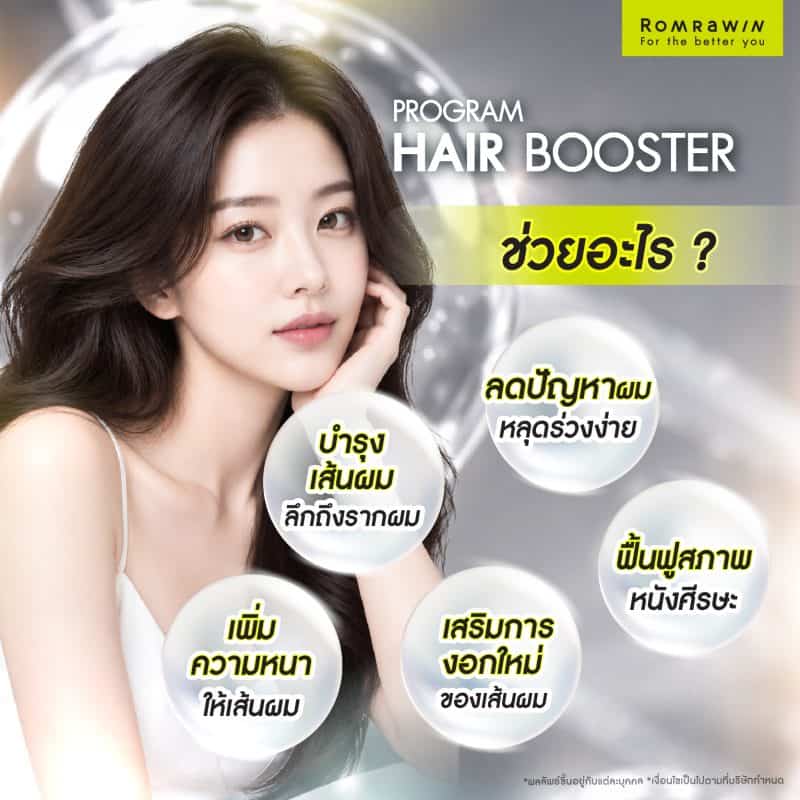
What are the benefits of Hair Booster?
Hair Booster is a program that focuses on caring for the hair, scalp, and hair roots simultaneously to help reduce hair loss and thinning, while nourishing the hair through multiple steps. These steps contribute to hair care in various aspects, including:
Hair Booster treatments can help reduce hair loss, which may be related to several factors such as stress, hormonal changes, genetics, or daily environmental pollution.
Hair Booster treatments nourish hair deep down to the roots, replenishing essential nutrients to help hair become stronger and healthier.
Hair Booster treatment helps revitalize the scalp, reducing oiliness and inflammation, preparing the scalp for hair growth.
Hair Booster treatment uses technology to stimulate hair follicles, promoting hair regrowth and better hair growth.
Hair Booster treatments help to increase hair thickness. When done regularly as assessed by a doctor, it will help the hair appear more voluminous, denser, and less visible.
Hair Booster is suitable for those experiencing hair loss and thinning hair, as well as those who want to care for their scalp and hair roots to make their hair overall stronger and more voluminous. The following individuals are suitable for Hair Booster treatment:
Note: Before undergoing Hair Booster treatment, please consult a doctor and inform them of your health history, including any pre-existing conditions, allergies, previous procedures, or medications you are currently taking.
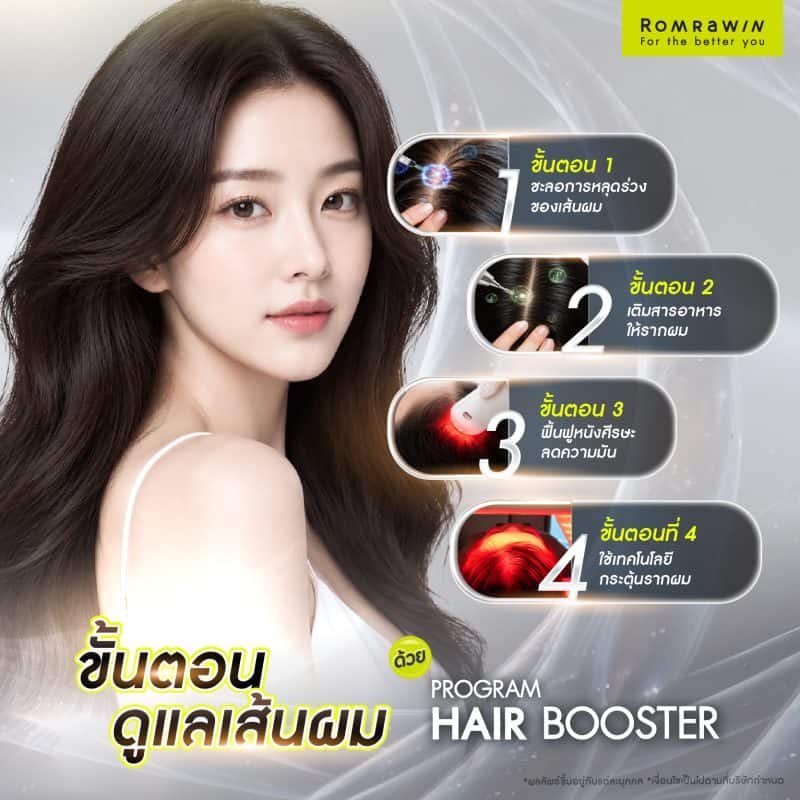
Hair care steps using Hair Booster.
Hair Booster addresses hair loss and thinning through a four-step process, each with a different function. This includes reducing hair loss, nourishing hair roots, revitalizing the scalp, and utilizing technology to stimulate hair roots.
The process begins with the doctor injecting medication throughout the scalp to help address hair loss that may be related to various factors such as stress, hormones, genetics, and pollution.
The next step involves the doctor injecting nourishing substances throughout the scalp to deliver essential nutrients to the hair roots. This nourishes the hair from the roots, making it stronger and less prone to falling out.
In this procedure, the doctor will use a Phono machine to help deliver nutrients into the scalp and hair roots, helping to restore scalp condition, reduce oiliness, and inflammation.
Finally, the treatment uses light therapy technology on the scalp to stimulate hair follicles, promoting hair growth and resulting in thicker, more voluminous hair with continued care.
Hair Booster excels in caring for the hair, hair roots, and scalp simultaneously. It's ideal for those experiencing hair loss, thinning hair, or a loss of hair density. The key features of Hair Booster include:
Hair Booster differs significantly from hair transplantation. Hair Booster focuses on maintaining existing hair follicles, while hair transplantation involves transferring hair follicles to areas with thinning or no hair. This is because...
Hair Booster is a program that cares for hair, hair roots, and scalp through four steps: slowing hair loss, nourishing hair roots, restoring scalp health, and using hair root stimulation technology to help hair become denser, stronger, and more voluminous.
This treatment is suitable for those who have started noticing excessive hair loss, thinning hair, weak hair, a wide parting, or notice that their hair looks less voluminous when tied up, but still have existing hair or hair roots. Hair Booster is a non-surgical procedure, requiring no recovery time. You can resume your daily activities immediately after the treatment. For optimal results, it is recommended to undergo continuous treatments as assessed by your doctor.
Hair transplantation is the process of moving hair follicle cells from an area with healthy hair roots, such as the back of the head, to areas with thinning or no hair. This increases the number of hairs in the desired area, resulting in denser hair, a more even hairline, and a more pleasing facial appearance.
This procedure is suitable for individuals with noticeable hair thinning, receding hairline, genetic and hormonal baldness, or very few hairs in specific areas. Before the procedure, the doctor will assess both the areas to be transplanted and the areas from which hair follicles will be harvested to plan the number of follicles needed and design a hairline that suits each individual's face shape. After the procedure, a recovery period may be required, so it is crucial to strictly follow the doctor's instructions to prevent side effects.
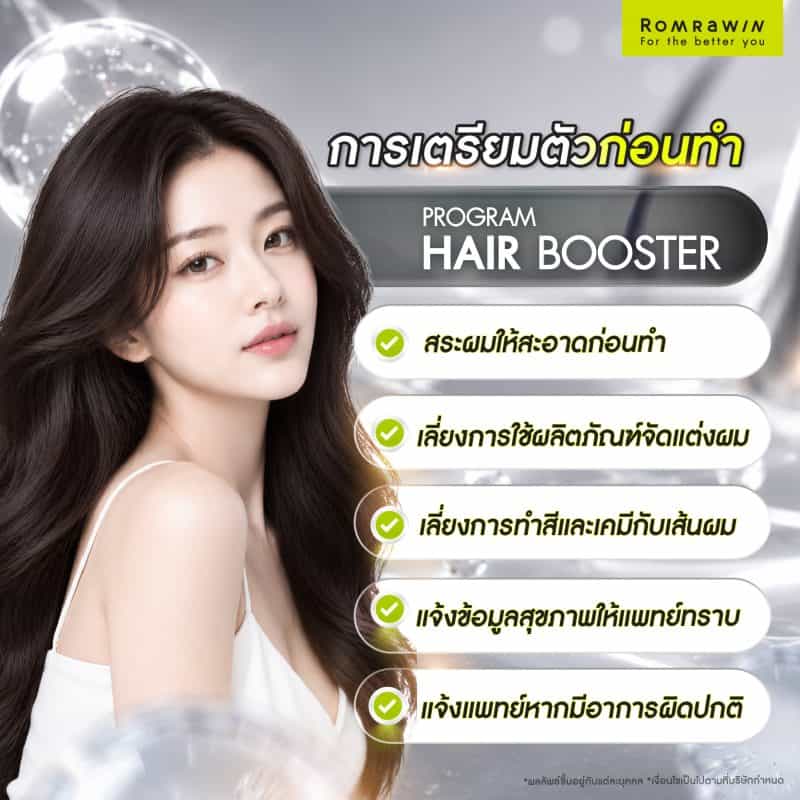
What preparations should be made before getting a Hair Booster treatment?
Before undergoing a Hair Booster treatment, ensure your scalp is clean and inform your doctor about your health so they can assess your suitability. Here are some simple guidelines:
After a Hair Booster treatment, it's important to care for your hair and scalp as advised by your doctor, and avoid behaviors that may cause irritation to allow the scalp to recover quickly. Here are some simple self-care tips:
FAQ: Answering your questions about Hair Booster.
Hair Booster is a program that helps reduce hair loss, thinning hair, or a feeling of decreased hair volume through a four-step treatment process. This includes slowing hair shedding, nourishing hair roots, restoring scalp health, and using light therapy to stimulate hair roots, resulting in thicker, more voluminous, and stronger hair.
Therefore, if you start to notice excessive hair loss, thinning hairline, widening hair parting, or feel like you have less hair when you tie your hair up, you can consult a doctor at Romrawin Clinic. A doctor will assess your hair and scalp condition before planning a personalized treatment, ensuring continuous hair care and effective long-term results.
*Results may vary depending on individual hair condition. Consult a doctor before receiving this service.
*Terms and conditions apply as specified by the company.